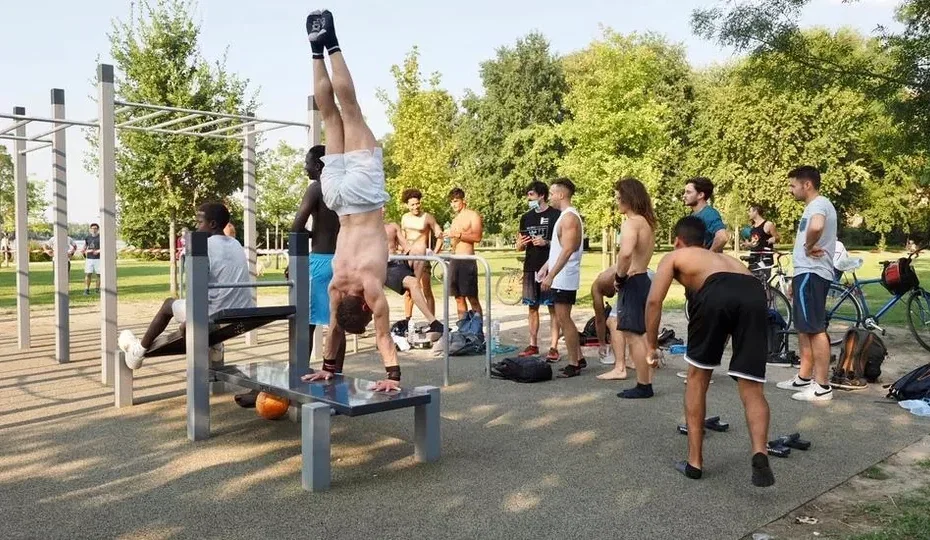
Stand in almost any well-used European park on a weekday evening and you will notice something worth paying attention to. The traditional fixed exercise machines along the pathway sit mostly empty. Twenty meters away, a group of teenagers is taking turns on a pull-up bar. A man in his forties is working through a dip progression on parallel bars. Two women are using a low horizontal bar for mobility and stretching work. Nobody organized this. Nobody scheduled it. The space simply made it possible, and people showed up.
That scene is playing out in parks across the Netherlands, Germany, Belgium, Scandinavia, and beyond with increasing regularity. The growth of calisthenics equipment in outdoor public spaces is not a fitness trend in the temporary sense of the word. It reflects a genuine and lasting shift in how communities want to move, gather, and use public space together. Municipalities that understand this early are making smarter long-term investments in public wellness infrastructure than those still defaulting to outdated fixed-machine installations.
What Calisthenics Equipment Actually Is
Calisthenics equipment covers outdoor fitness structures purpose-built for bodyweight training. Rather than guiding users through a fixed mechanical movement like traditional outdoor gym machines, calisthenics equipment creates an open training environment where people move using their own body resistance across a wide range of exercises and skill levels.
A well-configured outdoor calisthenics setup typically includes pull-up bars at multiple heights, parallel bars for dip and L-sit work, horizontal bars for hanging and dynamic movements, climbing elements, push-up and incline stations, balance structures, and Swedish ladder sections. The best installations are modular by design, meaning the layout can scale to available space and expand as community demand grows.
What makes this equipment category genuinely different from traditional outdoor gym machines is the absence of fixed movement paths. A pull-up bar does not tell the user what to do. A beginner uses it for a simple hang or assisted movement. An intermediate user builds toward their first full pull-up. An advanced athlete uses the same bar for muscle-ups, front levers, or dynamic freestyle movements. The equipment accommodates all of them simultaneously without any of them feeling like they are in the wrong place.
That natural scalability is the foundation of why calisthenics park equipment works so well in public environments where a single installation needs to serve an enormously diverse population.
Why Traditional Outdoor Gyms Are No Longer Enough
The traditional outdoor gym model served a purpose when it was introduced. It brought basic movement infrastructure into public parks and removed the cost barrier associated with indoor fitness facilities. For light physical activity and simple repetitive exercise, it delivered reasonable results.
The problem is that communities have outgrown it.
Fixed-motion machines with limited resistance and no progression pathway lose their appeal quickly. A park visitor who uses the same air walker or seated press in the same way for three months has nowhere to go from there. The experience plateaus and motivation to return fades. Many municipalities have noticed this pattern and started asking why their outdoor fitness investments generate consistent early interest followed by steady long-term decline.
Bodyweight training outdoor environments solve this problem structurally. The progression is built into the training itself rather than depending on equipment complexity. Someone who starts with basic hangs and assisted movements in January can be working toward unassisted pull-ups by spring and exploring more complex calisthenics skills by summer. The park evolves with the user across months and years rather than hitting a ceiling after the first few weeks.
That built-in progression is one of the most practical reasons public parks need calisthenics equipment now rather than at some future point when budgets allow.
The Social Dimension That Planners Often Underestimate
Calisthenics does something that traditional outdoor gym machines almost never manage. It creates genuine social interaction around exercise.
Bodyweight training is naturally collaborative. More experienced users demonstrate movements to beginners without being asked. Groups form around shared training goals. Teenagers who might otherwise spend an evening indoors gather at a calisthenics park because the environment feels open, challenging, and socially engaging in a way that a row of fixed machines simply does not.
Consider a residential park in a mid-sized Flemish municipality that recently installed a dedicated street workout area alongside an existing playground. Within six weeks of opening, a local training group had formed organically and was running informal weekend sessions for beginners. Parents began using the equipment during morning hours while children used the playground nearby. The space went from empty grassland to one of the most consistently active areas in the park without any programming, promotion, or organized events from the municipality.
The equipment created the conditions. The community did the rest.
This social energy has real implications for municipal planning. Active parks attract more consistent daily use. More consistent use improves the atmosphere, reduces maintenance issues related to neglect, and builds the kind of community identity around public spaces that makes residents feel invested in keeping them well maintained and respected.
Where BasixFit Fits Into the Picture
Not every municipality has the space or budget for a large dedicated calisthenics park, and not every community needs one.
This is where modular bodyweight training solutions like Denfit’s BasixFit range become practically valuable for public-space planners. BasixFit systems are designed around functional bodyweight movement that serves multiple user groups simultaneously, from calisthenics beginners to older adults working on mobility and stability to teenagers developing coordination and strength.
The modular approach means a smaller neighborhood park can start with a compact BasixFit configuration covering the most essential movement patterns and expand the installation later as community use grows and budget allows. This protects the initial investment and avoids the common problem of oversized installations that feel overwhelming in smaller public spaces.
A BasixFit MultiGym unit, for example, delivers six distinct exercises within a single structure footprint. For municipalities managing tight park layouts, that kind of space efficiency combined with genuine movement variety is far more practical than spreading six individual traditional machines across a larger area.
Matching equipment scale to community context is one of the decisions that separates successful long-term outdoor fitness investments from installations that underdeliver on their original promise.
Outdoor Pull-Up Bars: Still the Most Valuable Element in Any Calisthenics Space
Among all the components that make up a calisthenics park, outdoor pull-up bars remain the single most versatile and consistently used element available in public fitness infrastructure.
The reason is straightforward. A pull-up bar at the right height and structural quality serves complete beginners and highly trained athletes equally well. It requires no instruction to approach. No fixed movement pattern to follow. No mechanical components to maintain or replace. A beginner hangs from it and builds grip strength. A recreational user attempts their first pull-up. An experienced calisthenics athlete uses it as the foundation for advanced skill development. All of this happens on the same bar on the same afternoon.
Outdoor pull-up bars also integrate naturally into almost any public environment. European municipalities are installing them along waterfront promenades, in schoolyards, within housing development courtyards, beside cycling routes, and in small urban plazas where a full calisthenics park would not fit. The compact footprint makes them one of the most accessible entry points into outdoor fitness infrastructure for municipalities working within space and budget constraints.
Perhaps most importantly, pull-up bars encourage spontaneous use. Someone walking through a park who sees an available bar and stops for a few hangs is engaging in physical activity they had not planned. That spontaneous interaction, repeated across thousands of park visitors over weeks and months, adds up to meaningful community health impact that passive traditional machines rarely generate.
What Good Calisthenics Park Planning Actually Looks Like
Installing calisthenics equipment in a public space and planning a successful calisthenics park are two very different things.
The best outdoor bodyweight training environments are positioned where people already move naturally. Beside walking routes, near school entrances, adjacent to cycling paths, or connected to existing recreational areas. Visibility matters enormously. Open sightlines and welcoming layouts encourage participation from beginners who would otherwise walk past a space that feels intimidating or exclusive.
Surface materials, safety zones around structures, accessibility for different mobility levels, and maintenance access all deserve serious attention before installation begins. Equipment built to EN 16630, the European standard for permanently installed outdoor fitness equipment, provides the structural integrity and safety performance that public procurement requires and that heavy community use demands over many years.
The strongest calisthenics installations across Europe share one quality. They do not feel like exercise zones that happen to exist inside a park. They feel like a natural part of the park itself, designed for the community that uses the surrounding space every day rather than imported from a generic equipment catalog and dropped into an available corner.
Explore Denfit’s outdoor fitness equipment
FAQs
What is calisthenics equipment and how is it different from traditional outdoor gym machines?
Calisthenics equipment supports bodyweight training across a wide range of movements and skill levels without fixed mechanical motion paths. Unlike traditional outdoor gym machines that guide users through one repetitive exercise, calisthenics structures like pull-up bars, parallel bars, and climbing elements allow open-ended movement that scales naturally from beginner to advanced use.
Why are European municipalities investing in outdoor calisthenics parks?
Municipalities are investing in calisthenics parks because they generate more consistent long-term community engagement than traditional fixed-machine outdoor gyms. The built-in progression of bodyweight training keeps users returning over months and years, while the social nature of calisthenics creates active community spaces that serve multiple generations simultaneously.
Are outdoor calisthenics parks suitable for older adults and beginners?
Yes. Well-designed calisthenics parks include low-impact movement options, balance structures, and accessible bar heights that serve older adults and complete beginners comfortably. The same installation supports advanced athletes on the same equipment without either group feeling excluded from the space.
What is EN 16630 and why does it matter for calisthenics park equipment?
EN 16630 is the European standard governing permanently installed outdoor fitness equipment. It sets requirements for structural strength, material safety, and ergonomic design. Compliance is a necessary quality baseline for any public procurement of outdoor fitness infrastructure and protects both users and the long-term investment.
How much space does a calisthenics park require?
Space requirements vary considerably depending on the equipment configuration and community needs. Modular systems like BasixFit allow municipalities to create effective bodyweight training environments in compact spaces, while larger installations with full calisthenics circuits and street workout zones require more room. A qualified outdoor fitness supplier can assess site dimensions and recommend configurations suited to available space and budget.
What makes outdoor pull-up bars such a valuable element in public fitness spaces?
Outdoor pull-up bars serve complete beginners and highly trained athletes simultaneously without mechanical components, fixed movement patterns, or complex maintenance requirements. Their compact footprint allows integration into almost any public environment, and their approachable design encourages spontaneous use from park visitors who had not planned to exercise.
How do modular calisthenics systems benefit smaller municipalities?
Modular systems allow smaller municipalities to start with a compact, practical installation that covers essential movement patterns and expand the space as community demand and budget allow. This approach protects the initial investment, avoids oversized installations that feel out of place in smaller parks, and gives planners flexibility to respond to how the community actually uses the space over time.